Best Schools for CPL Training in Mysore | 70Knots Aviation
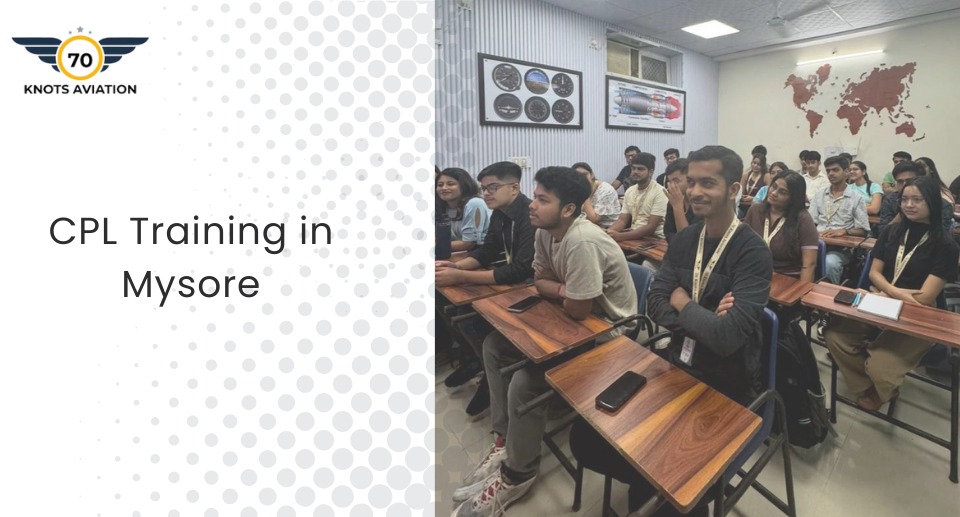
Finding a good flying training school and location is one of the most crucial parts of becoming a commercial pilot. When talking about CPL training in Mysore, candidates should not look at the course fees. Prospective candidates should look at several factors like the strength of the instructors, support provided by the ground school, the environment of the training, the schedules, the availability of the aircraft, and most importantly, the approval of the DGCA.
Mysore is a city in Karnataka that is relatively near several flying training locations, and when compared to larger cities and metropolitan areas, it may have a less stressful, fast-paced training environment. Many candidates may find various options for living in and around the city.
It’s always a good idea to look at different FTOs. Students should see how consistent they are in training. Most importantly, students should see what the FTO is approved to do and what the facilities and training conditions are.
The 70Knots Aviation Ground School offers candidates a way to learn more about the academic and examination aspects of pilot training. It’s important for candidates to get a systematic way to learn and prepare for their DGCA examinations.
When considering CPL training options in Mysore, prospective students should consider:
- Is the FTO currently approved by the DGCA?
- How many aircraft are serviceable?
- How many students are allocated to an aircraft?
- How often do students get to fly?
- How does the school handle the maintenance of the aircraft?
- Are instructors consistently available?
- What is included in the quoted training fee?
- What is charged separately?
- What kind of accommodation is provided?
- How does the school handle delays and additional flying requirement?
The DGCA has come up with a ranking system for approved FTOs and periodically ranks them. The first ranking system was implemented from October 2025 and other ranks will be released bi-annually. Therefore, students should cross check the DGCA site for latest information and not solely depend on old reviews to find the best institute.
CPL Eligibility in India
Before applying to a CPL training program, one should familiarize with the broad eligibility criteria.
Generally, candidates must meet the DGCA educational, age, medical and licensing requirements to be eligible for a CPL. A candidate is eligible to apply for a CPL, when he/she attains the age of 18 years and fulfills the educational qualification (including Physics and Mathematics at the relevant level).
Medical Fitness is a pre-requisite. A student should complete the medical fitness process well in advance as compared to starting flying training. This is because medical fitness is a lengthy and a continuous process.
Because DGCA requirement and processes are subject to change, a candidate should verify the requirements directly from DGCA and the training organization prior to admission.
MediCal Requirements for CPL Aspirants
Medical Fitness is an important aspect of professional pilot training.
Students are introduced to the concepts of Class 2 and Class 1 medical assessments during their pilot training. A Class 2 medical assessment is more relevant during the early stages of training and a Class 1 medical assessment is more relevant during the training for the final hurdles for a CPL.
It is safer to evaluate the medical fitness requirement at the early stages of training to understand other medical requirements before making a major financial commitment.
Students should also understand that completing a medical assessment once, does not automatically mean future assessments are fulfilled. Medical fitness and other licensing requirements should be current when the CPL application is made.
Understanding Required Flying Hours for a CPL
Students need to understand what the 200-hour CPL requirement means.
The DGCA framework states that a CPL applicant should have at least 200 hours of flight time as a pilot of an aeroplane, subject to the prescribed conditions and sub-minimums. The requirements take a cumulative total and the sub-minimums are included in the total.
The sub-components are as follows:
- 200 hours: Total flight time.
- 100 hours: Flight time as Pilot-in-Command, including a recent flying requirement.
- 20 hours: Cross-country flight time, as Pilot-in-Command, including a long cross-country requirement.
- 10 hours: Instrument time, including a specified time in a FNPT-I.
- 5 hours: Night flying, including 5 take-offs and landings.
It’s important to always check the latest DGCA regulations and training requirements before planning a training course.
So, the first statement should not be retained. The article should also not present multi-engine flying as a universal additional requirement for every CPL candidate. The requirements for multi-engine flying training and an aircraft endorsement can also vary based on the training and licensing pathway.
How is CPL flight training structured?
CPL training generally consists of combining theoretical training with practical flight training.
Students learn how to
- Aerospace & Aerodynamics
- Navigation
- Flight planning
- Radio communication
- Take-off & landing
- Instrument flying
- Emergency procedures
- Night flying
- Operational & Limitations
- Judgement
The objective is not to simply build flying hours. Students need to acquire the competencies of a professional pilot.
For prospective CPL candidates, training areas include:
- Air Navigation
- Aviation Meteorology
- Air Regulation
- Technical General
- Technical Specific, if any.
Recent DGCA examination results for CPL candidates indicate appearance in subjects such as Air Navigation, Aviation Meteorology, Air Regulation and Technical General.
Thus, aspirants should not view ground classes as supplementary classes to flying training. Theoretical knowledge acts as a strong foundation for understanding the operational principles of flying.
70Knots Aviation is focused on this ground-training segment of flying and prepares students for DGCA examinations and lays the foundation for students for their future flying training.
Admission Process for CPL Training
The admission procedure may vary from training organization to training organization, thus candidates should always refer to the current admissions procedure of the Flight Training Organization (FTO).
It usually consists of the following steps:
- Check your Eligibility: Ensure you meet the required age, educational qualification and applicable medical requirements, if any.
- Complete required Medical Fitness: Undergo the required DGCA medical examination, if any and ensure you meet the pre-requisites for obtaining the desired flying license.
- Finalize Approved FTOs: Shortlist organizations based on training facilities, aircraft, instructors, training infrastructure, flying availability and affordability, accommodation, and fee transparency.
- Submit Application: The organization may request for your educational, identity, medical documents, photographs, etc. for completing the admission process.
- Attend for Assessment: Assessment of the candidate’s ability and flying skills might take place and even interviews will take place before an admission is made.
- Fee Structure: Take your time to ensure that you understand the fee structure that is required by the FTO. Ask for a break down of cost in order to ascertain which costs will fall within the fee structure and which costs are separate from the fee structure.
- Training: Training will involve attending theory and practice training sessions.
- Licensing Requirements: After meeting the flying, exam, medical, skill test, and documentation requirements, the candidate can apply for the CPL as per the DGCA process.
When evaluating loan options, students should consider factors such as total repayment amount, interest rate, moratorium period, collateral, processing charges, and repayment conditions in addition to the monthly instalment.
Living in Mysore as a Flight Training Student
Living costs are a significant element of CPL training costs.
Students must provision for
- Housing
- Meals
- Local transport
- Study materials
- Calls
- Personal effects
- Travelling to and from their home city
These costs are dependent on the student’s lifestyle and the location within the city. Therefore no generic costs can be quoted.
Ideally, students should visit the location or consult current students for more information about the various accommodations in the area and safety. This is more useful in helping students determine travel time to training, food, and other daily activities.
Student-Counsellor Discussion
Student: I am planning to pursue CPL training in Mysore. What things should I look into before joining a flight training school?
Counsellor: The basics always come first. You have to ensure that the flight training school has the DGCA’s approval. You then need to verify the school’s facilities, training schedule and instructor availability, and student support. After that, compare the fees.
Student: I was told I should first complete a PPL and then begin CPL training.
Counsellor: Students are not required to complete a separate PPL to start training on the CPL pathway. Training pathways should be designed in accordance with the DGCA requirements and the FTO’s approved programme.
Student: How can I be sure a school will actually give me enough flying opportunities?
Counsellor: You should ask about the school’s current operational aircraft, student-to-aircraft ratio, instructor availability, and the average flying schedule. Also ask what the school does when an aircraft is down for maintenance.
Student: And what about DGCA exams?
Counsellor: DGCA exams are part of the professional pilot pathway, and should be planned together with flight training. Use the current information available on DGCA Pariksha website for examination schedules, syllabus and registration. 70Knots Aviation can help prepare students for the ground training part of their aviation pathway.
Frequently Asked Questions
How long will my CPL training take in Mysore?
It will take as long as it takes. Depending on the other factors beyond an individual’s control, like the flying schedule, weather and operational constraints, it could take a short time or a long time. Students should take a timeline given by a training provider as a guess.
Do I have to have a PPL in order to begin CPL training?
No, a PPL is not required to begin training on the CPL pathway. Students should follow the DGCA requirements and the training structure approved by their selected FTO.
How many flying hours are required for a CPL in India?
A total of 200 hours are required, with sub elements of:
- 150 hours as Pilot in Command (PIC)
- 20 hours of cross country flying
- 10 hours of instrument flying
- 5 hours of Night flying
- 10 hours of night flying with 5 take offs and landings each.
What factors determine the choice of a CPL training school?
Generally the student will look at the following when evaluating potential training schools:
- Current DGCA approval
- Availability of aircraft
- Training schedule and frequency
- Instructors
- Fees
- Accommodation and student support
- DGCA FTO rankings
Students should however look at the training schools and individual FTOs and evaluate the training environment.
Is 70Knots Aviation a flying school in Mysore?
70Knots Aviation is an aviation ground school in Mysore. Students should look for a DGCA approved FTO for their flying training requirements.
Is night flying a requirement for a CPL?
Night flying forms part of the CPL experience requirement. The applicable framework, however, requires 5 hours of night flying with 5 take offs and landings each.
A well-thought out strategy could enable the students to avoid any surprises. 70Knots Aviation can help students acquire the knowledge needed to pass their DGCA exams in addition to the CPL training.
Should you wish to undertake CPL training in Mysore, it would be wise for you to conduct your due diligence.
You may also find this blog informative :-
https://70knotsaviation.com/blog/how-does-a-pilot-learn-to-handle-an-aircraft/
The 70Knots Aviation team shares informative and practical insights on pilot training, aviation careers, DGCA requirements, CPL training, flight training, and the Indian aviation industry. Through well-researched articles, the team aims to help aspiring pilots, aviation students, and aviation enthusiasts understand training pathways, eligibility, courses, and career opportunities in aviation. As one of the best pilot training institutes in India, 70Knots Aviation provides clear and useful information to support readers at every stage of their journey toward a career in the skies. With a focus on practical aviation knowledge, the team brings together valuable insights to help readers make informed decisions about their aviation education and career.