What Happens After Pilot Ground Training?

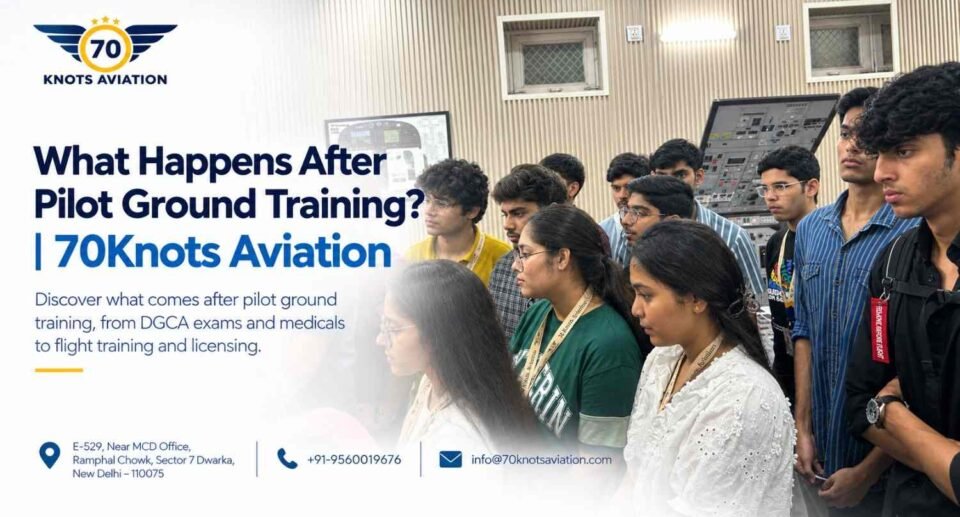
Pilot ground training helps build the foundation for the next phase of aviation training, but it is just the beginning. The ground classes help students learn the theory behind aviation and give them the foundation they need before they start flying.
One of the harder things for students to navigate is what comes next? Students often wonder if they should immediately start their flight training, take the necessary exams, get their medical, or find a flight training school. In reality, several things happen next.
70Knots Aviation wants students to know what comes next and to help take the mystery out of the preparation and organise it. Students are often overwhelmed, and knowledge about the next step can help students navigate it more easily.
It’s Important to Pass the Required DGCA Exams
One of the most important things to take care of after pilot ground training is passing the necessary DGCA exams. Students are responsible for preparing for and taking their exams.
Students must figure out which DGCA exam papers apply to the licence they want and prepare accordingly, which may include ensuring they have the correct paperwork. Subjects like Air Navigation, Meteorology, Air Regulations, and other technical subjects related to aircraft require ongoing revision and cannot be studied just for the classes and then forgotten.
We believe choosing the best DGCA ground classes in India can be of great assistance during the preparation phase as systematic teaching, revision and practice help the student build a sound knowledge base before getting into the practical aspect of flying.
Keep Medical Up to Date
Addressing the medical requirements is of equal importance during this transition. Students should be aware of the medical requirements pertaining to the license they are aiming for and get themselves evaluated by the required authorities.
It is always prudent to have one’s medical documents in order and check if any evaluation or follow-up is required before making significant training decisions. It is always beneficial for the students to get organized medically early on so they can avoid an unexpected break later when they want to begin their flight training.
Prepare for Flight Training
Once students have an understanding of the principles of flying through the ground school, they can start applying them in an aircraft during flight training. Students are guided and trained to develop skills in aircraft control and flying as well as other skills needed for communication, navigation, procedures and decision making.
As there are many aspects of flight training that require student’s engagement with multiple tasks at the same time, students are required to retain, rely and apply their ground school knowledge extensively throughout flight training.
For those undertaking Commercial pilot training in India, the transition from ground training to flying training should be perceived as one combined continuous process and not as two distinct and separate processes. Learning on flying training is very much built on the ground training preparation.
Students Should Take Time to Research
Students should take time to research various training options available, rather than engage the first option they find to be convenient. Training option selected should match students’ expectation and requirements.
Each student should ascertain exactly what will be incorporated in the training and the unstated requirements and responsibilities they may have to fulfill themselves. There are a lot of unanswered questions which students should raise before or during their training. Some of the unanswered questions may include: How does training get prioritized? What are the procedures for scheduling? Who decides training progress and determination? How will training progress get interrupted? How long will the interruptions be?
70Knots aviation gives priority to ground training preparation. Therefore, students are at an advantage as they can use their theoretical preparation to build a foundation and make informed decisions for the practical flying stage that follows.
Continue Studying While You Fly
A common misconception is to believe that, once flight training begins, revision of ground concepts and theory becomes unnecessary. Revising fundamental ground theory is essential and should continue during flying training.
Working on your revision skills and incorporating revision routines into your daily schedule can help stop knowledge from rusting. Short, consistent study sessions are more effective than attempting to fill in the knowledge gaps from the long, uninterrupted periods of time between ground school training sessions.
A Conversation Between a Student and Counsellor
Student: I’m almost done with my ground training. What do I do next?
Counsellor: First, make sure you understand what it is you still need to do. For example, do you need to get some medical work done or are there some documents you still need to send in?
Student: I suppose I should look into flight training then.
Counsellor: It’s a good opportunity to do some research on flight training and think about the factors that will help guide your decision. You should think about the flight training structure, the location of the training, what aircraft you’ll be training on, and the type of instructor you’ll be working with.
Student: Will I have to study my ground subjects once I begin flying lessons?
Counsellor: Definitely, you will have to study for your theory tests. You should try to connect your subjects learned from ground school with what you learn from flying lessons.
Student: Therefore, there is close relation between ground school and flying school?
Counsellor: Definitely yes.
What Should Students Do After Ground Training?
This should be considered a transition phase. Students should review their examination status, complete medical requirements, do research on flight training, and also maintain their theoretical knowledge.
There’s no advantage to rushing through to the next stage before understanding the prerequisites. By taking a more structured approach, students can identify omissions, and enter practical training with more confidence.
At 70Knots Aviation, emphasis on structured ground preparation helps students appreciate that becoming a pilot is more than just completing a set of classroom lessons.
5 Questions Students Commonly Ask
1. Can I start flight training after completing ground classes?
Yes. Students can make arrangements for flight training once they fulfill all the requirements including the eligibility and medical requirements. The actual sequence depends on the pathway of the license the student is pursuing.
2. Will I have to study further after ground training?
Yes. Revision of theoretical subjects is important for the student since it will help them remember and use the gained knowledge practically.
3. How do I choose a flight training company?
Consider the flight training company in terms of their organizational and procedural aspect, aircraft used for training, instructional support, training environment, schedule, and communication of the training process.
4. What if I still have to take some exams?
Make up your mind about them. You should proceed with preparation at the same time that you are searching for practical training; however, students should know what conditions should be fulfilled for getting access to certain level of training.
5. Is ground training important after I started to fly?
Yes. Theoretical background becomes especially important when a student starts using them practically. Knowledge of the reasons why the procedure is done helps a lot in practice.
Moving Forward With a Clear Plan
Completing ground pilot training signifies the transition from laying the foundation of aviation knowledge to applying this knowledge in real flight situations. Other aspects of planning including examinations, medical requirements, flight training and study also combine to form this transition.
Students should be aware that they can’t simply ‘end’ ground school and begin flying. The knowledge gained during preparation for ground school supports and aids practical training, as well as supports and aids future professional duties.
It is often possible for students to clear up their understanding of practical flight training requirements and then plan effectively for this. 70Knots Aviation can assist students in preparing for this next stage of their flight training.
The 70Knots Aviation team shares informative and practical insights on pilot training, aviation careers, DGCA requirements, CPL training, flight training, and the Indian aviation industry. Through well-researched articles, the team aims to help aspiring pilots, aviation students, and aviation enthusiasts understand training pathways, eligibility, courses, and career opportunities in aviation. As one of the best pilot training institutes in India, 70Knots Aviation provides clear and useful information to support readers at every stage of their journey toward a career in the skies. With a focus on practical aviation knowledge, the team brings together valuable insights to help readers make informed decisions about their aviation education and career.