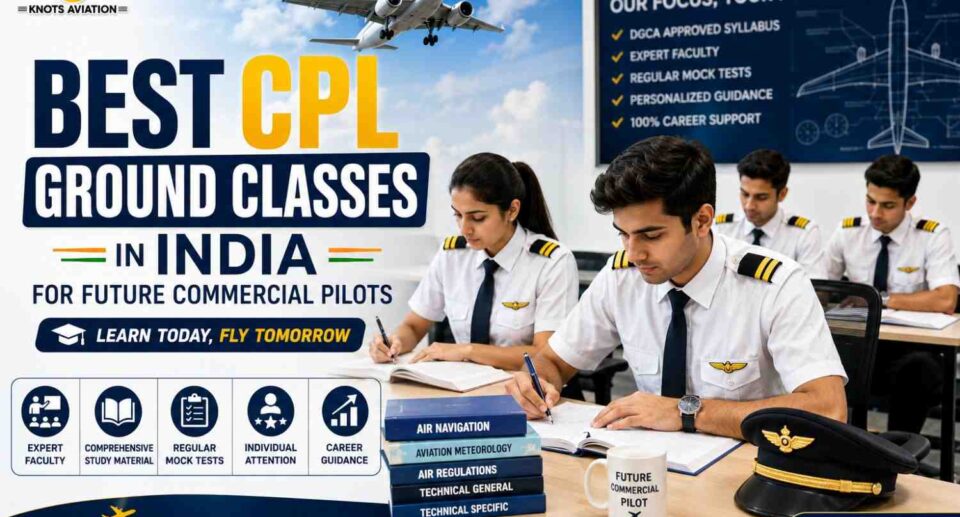
Top CPL Training in Kochi | 70Knots Aviation


With the growing aviation sector in India, many students are pursuing careers as pilots. However, reaching the cockpit requires more than the interest to fly. Students require a planned and phased approach to their preparation, clear understanding of different aspects of aviation, DGCA examinations, medical fitness, and training with a flight training organization.
Students seeking CPL training in Kochi have an advantage because they can prepare for their first flight training in ground school, get the required guidance for their career, and gain a better understanding of the concepts of aviation.
Many students, after doing ground school, have the confidence to face professional pilot training and a structured aviation career. 70Knots Aviation provides ground school training to help students acquire the theoretical foundation required for a career in aviation.
What is CPL Training?
CPL training is the next step for students looking to build a career as a pilot. Obtaining a CPL requires students to accomplish the theoretical examinations and flight training, as well as the flying experience, required by the Directorate General of Civil Aviation (DGCA).
While the end-goal for students is to gain knowledge on how to fly, the road to being a pilot requires various stages of training and knowledge acquisition. One such training is ground training. Unlike flying training, ground training does not require substantial capital, and many students combine ground school training and flight training.
Distinguishing Ground School Preparation and Practical Flight Training
Students searching for CPL training in Kochi must distinguish ground school preparation from practical flight training. A ground school can only prepare students for their theoretical requirements while the flying training must be done by a flight training organization.
The Importance of Professional CPL Training
For students to be certified as Pilots-in-command (PICs), they must meet several requirements, some of which are extremely complex, and span several areas including theoretical knowledge of various subjects, aviation rules and regulations, and aircraft performance and proficiency. Such a demand on PIC students is the reason professional CPL training is valuable to many students.
Learn Aviation Basics
Professional ground training allows students to learn aviation basics including the principles of aircraft operations, navigation and meteorology, and relevant regulations.
Prepare for DGCA Examinations
DGCA exams cover various subjects and require focused training. Professional ground training, with instructors who have knowledge and experience in these subjects and examinations, helps students better understand the subject areas, identify their weak areas and plan for revision and preparation.
Instill Discipline
Students must prepare for several end-of-unit exams and be disciplined throughout their aviation careers. Training gives students the tools for a structured study and lifelong discipline.
Get Career Advice
Aspiring Aviation students are interested in the professional aspects of flying including the examinations, training and licensing process, as well as career growth opportunities. Working in a professionally managed aviation training environment aids the understanding of the various stages in the pilots’ career pathway, and enables one to make better-informed choices.
Topics Covered during CPL Ground Training
The ground training for a CPL encompasses theoretical aspects of flying and prepares the student to understand how aircraft functions and helps student understand flight management and operation.
Air Navigation
This topic covers the various flight navigation techniques, calculation and planning. Students learn to analyze different types of navigation charts, and understand how pilots determine and figure out the position of the aircraft and its course.
Aviation Meteorology
Meteorology helps the student understand the different types of weather systems, atmospheric conditions and how it influences flight operations. Students learn various techniques to interpret and analyze the weather situation and its impact on aviation.
Air Regulations
It covers the rules, regulations and procedures of CAA and other international Civil Aviation agencies. Knowledge of the Act helps Pilots to understand their legal responsibilities and how to operate within the given regulatory framework.
Other Topics
Students cover other technical aspects of flying including instruments and systems. Students also learn other technical aspects of aircraft, and specific systems of aircraft where it is applicable to their training.
Radio Communications and RTR Preparation
Preparation for Radio Telephony (RTR) helps student gain radio communication skills and other interpersonal skills required for flying.
70Knots Aviation ensures that their student gain theoretical knowledge required to be a professional pilot by providing ground school trainings.
Benefits of Training for CPL in Kochi
Kochi is well connected with roads and airways. Keeping these in consideration along with the right educational environment, Kochi is the best bet for students to undertake their aviation education from the beginning of their piloting career.
A Learning Environment
Students can build discipline required for academic and professional training to become a pilot while being a part of a structured environment.
Awareness About Aviation
As the Indian aviation sector is booming, so are aspirations of students to build their careers in this sector.
Vast Aviation Training Opportunities
Around Kochi, various facilities for aviation training are available for students to get a pilot license. Students have the opportunity to analyze and evaluate different training centers based on course, faculty, study material, exam, and learning aids.
Easy Accessibility
For students from different parts of Kerala, Kochi is well connected, and students should analyze training centers based on curriculum, faculty, and training aids offered.
What Should Be The Features of A Good CPL Training Institute?
There are several factors to consider. The main considerations should be the experience of faculty members and the types of training materials offered by the institute.
Structured Study Material
Students should receive well-organized study material relevant to their DGCA exam preparation. Good study material complements the classroom teaching and helps in easy revision.
Regular Practice and Assessment
Mock tests and assessments give students an opportunity to understand their level of preparation and find out the subjects which require further work before they appear for the main examinations.
Teaching Methods
The subjects in aviation involve a lot of theory, technical concepts, calculations, regulations, and practical applications. The trainer must give examples and explain concepts and figures by using practical applications.
Batch Size
Smaller batches can lead to more interaction between students and the trainer.
Career and Training Guidance
A training provider can enlighten students on the entire journey of the CPL including exam preparation, flight training, medical, licensing and career opportunities.
Students planning to pursue CPL training in Kochi can evaluate different training providers based on actual support offered and not rely on unverified statements like the best and the top training.
How Professional Ground Training Helps CPL Students
A structured ground school program enables students to systematically study various topics for CPL preparation.
As Students Prepare for Exams
Regular revision, practice questions, and mock exams, in conjunction with timely instructor feedback, are excellent ways for students to identify knowledge gaps and be better prepared for the final exam.
Developing Professional Communication
Pilots are required to communicate clearly and accurately. While becoming familiar with the terminology and other facets of professional communication can be better learned in a flight training context, there is no reason why a student cannot become comfortable with this way of communicating in a ground training context.
Developing Professional Attributes
A definite case can be made for the development of attributes such as punctuality, preparation, attention to detail, revision and disciplined study to name but a few, which a student can easily transfer from the ground training environment to the flight training environment.
70Knots Aviation has a structured approach to ground school preparation to give students a head start with their theoretical training for their career as a professional pilot.
After Completing the CPL Requirements
Obtaining a CPL opens many avenues in the profession of flying. It is prudent to understand that having a CPL does not mean automatic entrance to an airline. Other factors such as experience and additional qualifications and regulatory stipulations impact career progression.
CPL and Commercial Flying
A CPL is the first step to a career as a commercial pilot with an airline, or other commercial operator, subject to the regulations of the State of issue.
Flight Charter and Charter Pilot
Passenger and special flights for tourism, business, and other purposes can be conducted by a flight charter operator. In addition, pilot jobs with a flight charter operator are available.
Cargo Pilot
Cargo operators require qualified pilots to fly aircraft used for air cargo transportation. Opportunities are typically limited to the type of operator, the type of aircraft, experience, and the operator’s hiring requirements.
Other Aviation Careers
In addition, careers in aviation include operational, training, safety and managerial jobs. Students can even get into these professions depending on qualifications, interests and career objectives.
How to Perform Well When Preparing for CPL
It is recommended that students adopt a disciplined and consistent way in their studies.
Make a Study Plan
Ensure that you schedule your time for studying each subject as well as allocate enough time for each subject.
Attend Classes Consistently
This will ensure that you grasp concepts and meet course requirements.
Do Calculations
Continuous practice is important in grasping the concepts and theories of aviation.
Revision Every Day
This will help students sharpen their knowledge, know where they lack and comprehend concepts better.
Stay Current with DGCA Requirements
Regulations and requirements are always changing. Students should reference the DGCA to be sure they are current.
Choosing a Training Provider Carefully
Students should research course structure and learning materials. Consider student support and transparency. The training provider should assist students in understanding aviation concepts for their future career.
Role of Professional Guidance in Aviation
Students start developing attributes like attention to detail, and discipline during training. A structured learning environment accelerates this development. Attaining a proficiency in technical skills as well as interpersonal communication requires situational awareness, decision making, and other soft skills.
Students need the help of professional guidance to understand the differences in the stages of the training pathway. Knowledge of these stages helps students make better training decisions and plan their training effectively.
Students interested in CPL training in Kochi should prepare more systematically, think like aviation professionals, and ensure that their preparation helps them build the discipline for next stages of their training.
70Knots Aviation provides aviation ground-school preparation, helping build the theoretical foundation for aviation.
Students may also use this preparation to reinforce their foundation and assist in the pursuit of their professional pilot aspirations. Students using our services are directed to avail the appropriate flight training pathways as well.
Flying is a passion for many. Aspiring to be a professional pilot requires commitment, and preparation and understanding the pathway to licensing. Students interested in CPL Training in Kochi are advised to review and evaluate the preparation they receive. Ground-school preparation is different from flight training.
Understanding Air Navigation, Meteorology, Air Regulations, and other related subjects can better equip students to tackle DGCA examinations. Being aware of and disciplined in the study and revision of the regulatory requirements can make the preparation more effective.
On the whole, it is an uphill task to sustain commitment for long durations for professional training; regular review and checkpoints are required.
You might also find this blog useful:-
What are the Documents Required for Pilot Training in India?
The 70Knots Aviation team shares informative and practical insights on pilot training, aviation careers, DGCA requirements, CPL training, flight training, and the Indian aviation industry. Through well-researched articles, the team aims to help aspiring pilots, aviation students, and aviation enthusiasts understand training pathways, eligibility, courses, and career opportunities in aviation. As one of the best pilot training institutes in India, 70Knots Aviation provides clear and useful information to support readers at every stage of their journey toward a career in the skies. With a focus on practical aviation knowledge, the team brings together valuable insights to help readers make informed decisions about their aviation education and career.