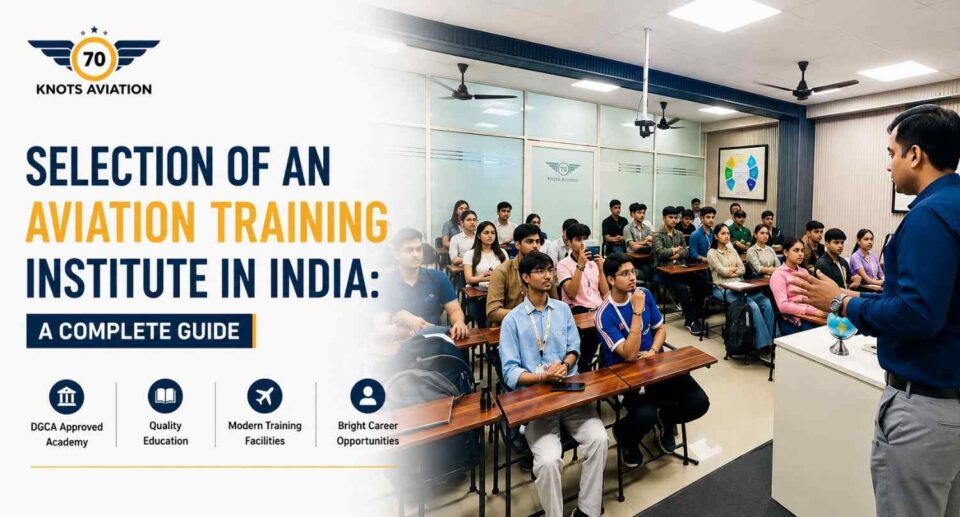
Selection of an Aviation Training Institute in India
The First Step Towards Your Aviation Career
The role of a pilot is one of the aspirations of many aviation lovers in India. Aspiring pilots have the opportunity of making a career through piloting, which yields great gains. But there is a lot that goes into commercial piloting including proper planning and selection of the best aviation training institute.
The aviation industry operates with a high level of precision and a commercial pilot candidate must meet a variety of standards due to the high level of responsibility a pilot has for the safety and security of both the passengers and the aircraft. Significant amounts of technical knowledge, skills, and the ability to perform certain maneuvers are also a requirement for pilot training.
One of the most important factors on this journey is the choice of training institute. A high-quality training academy will provide students the best education, highly professional and experienced trainers, and the guidance to aviation examinations. For students who are looking for the Best Pilot training institute in Delhi, an understanding of training and the choice of the correct institute and learning environment is essential.
Institutes such as 70Knots Aviation, have also focused on the need of the aviation aspirants, to have the complete understanding of the pilot training pathway from the ground classes, through the examination and the career guidance.
Pilot Training in India: The Requirements
What are the Steps to Become a Commercial Pilot?
To become a commercial pilot, one must undertake a series of steps as mandated by the Directorate General of Civil Aviation (DGCA). This is a multi-tiered process that encompasses a variety of flying and theoretical tests.
The journey of a pilot involves:
- Meeting the requirements for pilot training
- Finishing required ground training as per DGCA
- Clearing the DGCA mandated tests
- Completing the required flying hours.
- Acquiring the required licenses.
The journey begins with the learners’ understanding of the subjects related to Air Navigation, Aviation Meteorology, Aircraft Technical Knowledge, and Air Regulations.
Theoretical knowledge is then supplemented by the training of flying and Aircraft Handling, Navigation and Communication Procedures.
One of the most important aspects of flying training is the presence of a well-defined training structure and plan to facilitate the effective and prompt completion of every training stage.
Choosing the Right Aviation Institute
Training Quality and a Strong Aviation Career
The selected institute has a great role in the overall training of a student since flying is a highly technical field and requires utmost and the best of guidance.
A good aviation institute has:
- Aviation instructors with experience
- Current Study Material
- Examination Preparation Guidance
- Support for Practical Learning
- Career Guidance
Students show a lot of interest in obtaining their flying training but tend to ignore the importance of sound knowledge of theory. The DGCA examinations do require candidates to possess a basic understanding of the Principles of Aviation.
Professional institutes help in developing the confidence of the students and prepare them for the flying duties and responsibilities and the written examinations.
Why Aviation Training is preferred in Delhi
Delhi is one of the most important aviation hubs in India. The city has all the needed infrastructure in terms of aviation professionals and training facilities which support an excellent learning atmosphere for aspiring pilots.
The following are the factors that make Delhi a preferred location among several students.
- Accessible Aviation Faculty
- Better Connectivity
- Numerous DGCA Coaching Institutes
- Aviation Career Guidance
Delhi is the top choice for students wanting flying training due to the easy accessibility of quality education. Dwarka and Ramphal Chowk have emerged as the most sought after locations for aviation students due to the availability of professional training and educational centers.
DGCA Approval in Pilot Training
Importance of DGCA Guidelines for Aviation Students
The Director General of Civil Aviation in India is the apex body that supervises the civil aviation industry. The DGCA has the mandate to certify that pilot training in India meets certain educational and safety standards.
Aviation students must understand that this is a highly regulated industry and training without the regulatory framework can lead to difficulties in obtaining the required licenses and during the examinations.
A DGCA Pariksha oriented institute can aid the students to gain a basic foundation with respect to:
- Licensing requirements
- Regulatory framework of aviation
- Relevant subjects
- Examination patterns
DGCA Guidelines must be adhered to while pursuing an aviation career in order to support the growth of the career.
DGCA Pariksha Preparation
Importance of the DGCA Pariksha for Pilot Aspirants
DGCA Pariksha is one of the examinations that a student wanting to pursue a career as a commercial pilot in India has to clear. This examination checks the student’s knowledge of the core subjects of aviation.
The DGCA exams are perceived as difficult by many students as aviation subjects are complex and require the understanding of various theories and their practical implications.
With the right training, students stand an excellent chance of success. Professional ground training offers a reliable framework, regular practice, and expert guidance.
The preparation for DGCA examinations generally covers subjects related to:
- Air Navigation
- Aviation Meteorology
- Technical General
- Air Regulations
- Radio Telephony
DGCA Ground Classes for Pilot Aspirants
DGCA Ground Classes Play a Vital Role During Ground Training
Learning the theory is the first step to becoming a pilot. To operate an aircraft, pilots must know systems, weather, navigation, and the law.
DGCA Ground Classes Play a Vital Role During Ground Training
DGCA ground classes also have the added benefit of helping students develop the knowledge to safely operate flights.
Professional ground classes provide aviation aspirants the opportunity to have aviation theory that is required to operate flights and also the confidence to pursue flight training.
Students looking for the Best DGCA Ground classes in Ramphal Chowk and the Best DGCA Ground classes in Dwarka must also look for the teaching methodology and the teaching aids before actually joining the classes.
Advantages of Joining DGCA Ground Classes
The best DGCA ground classes have the following benefits to aviation students:
- Understand the concepts of aviation
- Have aviation experts
- Have regular practice and evaluation sessions
- Help with preparation for the DGCA exam
Ground classes help students identify areas of improvement and also give students the time and opportunity to improve these areas prior to taking the exam. Better preparation for ground classes helps students perform better during flight training.
Help With Assessing Aviation Training Costs
Pilot Training Cost India
Cost is one of the main factors for aspiring pilots when it comes to making decisions about what profession to pursue. Pilot training cost in india is still a major question for a lot of people in the country. The total cost of the program depends on the level of training, geographical location, training aircraft, and the facilities of the institute.
Some of the major expenses include:
- How many training hours
- Cost of Training Aircraft
- Cost of the instructor
- Cost of the exam
- Cost of ground training
- Accommodation and sundry expenses
Prospective students should be aware of all the expenses that will be incurred to complete the entire training in order to allow their families ample time to determine and manage the budget. Opting for an institute based on the low fees may not provide the best or the safest learning experience and may affect a student’s career.
Using Professionally Structured Guidance When Training to Fly
How To Avoid Errors When Training to be a Pilot
There are many obstacles that a student will have to overcome in order to be a successful commercial pilot. Common obstacles may include an absence of necessary knowledge regarding eligibility to take a test or the understanding of the test itself. Other obstacles are career road mapping and a lack of knowledge regarding the available career pathways.
Some of the essential functions of a professional aviation institute include:
- Educating students about the eligibility requirements
- Informing students of the training and testing timelines
- Informing students of all potential career pathways
- Providing professional instructors who are able to guide students through the many obstacles in the industry and enable them to make educated decisions.
Pursuing a career in aviation is a long term commitment. Therefore, proper planning and a career roadmap are essential.
Supporting Aspiring Pilots at 70Knots Aviation
Supporting Aviation Training Pilots
At 70Knots, the aim of the institute is to educate aspirants about all of the steps involved in becoming a commercial pilot. The institute has a structured support system that provides aspirants with continuous guidance during all of the training stages.
The learning method encompasses guidance pertaining to the DGCA examination, aviation subjects, and pilot career guidance.
Students are offered:
- Professional aviation guidance
- DGCA-oriented learning assistance
- Organized training techniques
- Relevant industry information
The right learning atmosphere allows students to remain attentive and ready to meet the challenges inherent in aviation training.
Pursuable Career Options Upon Completion of Pilot Training
Diverse Career Opportunities in Aviation
Upon attaining the requisite training and licenses, pilots can pursue myriad career options in aviation.
Commercial pilots can be employed by airlines, charter companies, and other aviation entities.
Additional career options in aviation include:
- Airline pilot
- Flight instructor
- Aviation management
- Charter aviation services
The constantly evolving aviation sector means a growing demand for qualified and well-trained professionals.
Success in aviation, however, entails much discipline and a persistent desire to learn.
Conclusion: Selecting the Correct Route to Your Pilot Career
The lengthy process of becoming a pilot entails the right investment and training. One of the most pivotal choices is the selection of the appropriate aviation institute.
The best institutes have the capability to prepare students to acquire the necessary DGCA clearances and develop professional skills in aviation with the added value of confidence.
Consideration of the training quality, faculty experience, examination assistance, and learning aids, is a must for students before making this important decision.
With proper preparation and guidance from 70Knots Aviation, aspirants can be confident of their first step to being able to fulfill their dreams of becoming professional pilots.
Most Common Questions
What are the pilot training requirements in India?
10+2 (with Physics & Mathematics), medical condition, and DGCA approved training program.
How does DGCA Pariksha help aspiring pilots?
DGCA Pariksha tests candidates on key subjects of aviation. Aspirants of pilots should take these tests to be one step closer to licensure.
What is the pilot training cost in India?
The pilot training cost in india varies depending on fees charged by the institute, the airplane, operating cost, and the trainer for the remaining hours.
Why is it important to attend DGCA ground classes?
DGCA ground classes provide essential knowledge of aviation and an understanding of the basic flying theory, as well as preparation for exams.
What factors would help me choose the best Pilot Training Institute in Delhi?
Check the quality of training, the study and career guidance materials, and the instructors’ as well as the institute’s DGCA-preparatory focus.
Is DGCA ground class available in Dwarka and Ramphal Chowk?
Yes. Check the quality of teaching, course structure and student support before opting for a training program.
The 70Knots Aviation team shares informative and practical insights on pilot training, aviation careers, DGCA requirements, CPL training, flight training, and the Indian aviation industry. Through well-researched articles, the team aims to help aspiring pilots, aviation students, and aviation enthusiasts understand training pathways, eligibility, courses, and career opportunities in aviation. As one of the best pilot training institutes in India, 70Knots Aviation provides clear and useful information to support readers at every stage of their journey toward a career in the skies. With a focus on practical aviation knowledge, the team brings together valuable insights to help readers make informed decisions about their aviation education and career.