DGCA Pilot Training in Jaipur: A Real Journey to the Cockpit
Look, if you’re reading this, you’ve probably spent nights staring at the ceiling thinking about flying. Maybe you watched a plane take off from Jaipur airport and thought, “That could be me up there one day.” Well, it absolutely can be. And Jaipur? It’s actually a fantastic place to make that happen.
Let me be straight with you. I’ve worked with pilot training institutes across India, and I’ve seen firsthand what makes Jaipur special for this. It’s not just marketing talk—there are real, practical reasons why hundreds of aspirants choose this city to pursue their aviation dreams.
Why Jaipur Actually Makes Sense for Pilot Training
The Weather Thing
Jaipur has this gorgeous clear weather most of the year. I’m not exaggerating when I say that from January through April and October through November, you can literally go flying almost every single day. That matters because you’re not sitting around twiddling your thumbs waiting for the weather to clear. You’re in the air, logging your hours, building real confidence.
Compare this to places like Delhi or Mumbai where you might lose 20-30 flying days just waiting out the monsoons and fog. In Jaipur, you’re moving forward consistently.
Lower Air Traffic Stress
Here’s something nobody talks about enough: when you’re learning to fly, you don’t want to be crammed into a super busy airspace. Jaipur’s airspace is way less congested than Delhi or Mumbai. This means your instructors aren’t stressed about managing heavy traffic, and you’re not anxious about slot timings. You’re just learning.
I’ve sat with instructors who’ve trained pilots in both places, and they universally say the same thing—you progress faster in Jaipur because there’s less chaos.
Your Money Goes Further
Let’s talk reality. Pilot training is expensive. Really expensive. But in Jaipur, because operational costs are lower, the fees are genuinely more reasonable. You’re looking at 10-15% cheaper flying rates compared to Delhi or Bangalore. When you’re counting every rupee, that matters.
Plus, accommodation is affordable. A decent room with other pilot trainees costs ₹8,000-12,000 a month. Food is cheap. You’re not bleeding money just to live while you’re training.
Real Infrastructure, No Compromises
People worry that training outside a metro means outdated equipment. Nope. The institutes in Jaipur—the good ones, anyway—have genuinely modern aircraft, solid flight simulators, and instructors who know their stuff. You’re not getting a second-class education. You’re getting quality training at reasonable rates.
With modern infrastructure and expert mentoring, DGCA Pilot Training in Jaipur helps students prepare effectively for DGCA exams while gaining the skills required for a successful pilot career.
The Honest Truth About DGCA
If you’re going to train in India, you need to understand DGCA. It’s not some mysterious government body that’s out to make your life difficult. It’s basically India’s air traffic control authority, and they set the standards for who can and can’t fly commercial aircraft.
Here’s what DGCA does: they make sure that when you get your pilot’s license, it actually means something. Airlines trust DGCA standards. International authorities recognize DGCA certifications. So when you see “DGCA-approved,” that’s not just a certificate to hang on the wall—it’s your golden ticket.
The regulatory body oversees three main routes to becoming a commercial pilot:
Student Pilot License (SPL) – This is your learner’s permit. You get this first, and it lets you fly under supervision. It’s pretty straightforward to get.
Private Pilot License (PPL) – Think of this as flying for fun. You can take your friends flying, go on trips, but you can’t earn money. Some people stop here. Most don’t.
Commercial Pilot License (CPL) – This is the big one. This is what gets you hired by airlines. This is what makes flying your actual job.
What You’re Actually Getting Into: The CPL Program
Let me walk you through what 18-24 months of your life looks like if you pursue this seriously.
The First Phase: Ground School (3-4 Months)
You’re sitting in a classroom—sometimes online, sometimes in person—learning aviation theory. And I mean learning. Not memorizing. Not just cramming for exams. Actually understanding how planes work, how weather affects them, how to navigate, how to communicate on radio.
The DGCA requires you to master five specific subjects:
Air Navigation – You learn map reading, flight planning, how GPS works, how to navigate from point A to point B without getting lost. Some people find this fascinating. Some people find it boring. Either way, you need to know it cold.
Meteorology – Understanding weather. Cloud types, wind patterns, what a thunderstorm looks like on a radar, when it’s safe to fly and when it absolutely isn’t. This one actually saves lives.
Air Regulations – The rule book. Indian airspace rules, DGCA requirements, crew regulations. It’s dry, but it’s important. You’re learning to play by the rules that keep the skies organized.
Radio Telephony – How to talk on the radio like a professional. Standard phraseology, emergency procedures, communication protocols. You’ll spend hours practicing this. “Jaipur Ground, this is VT-ABC ready to taxi runway 27.”
Technical General – How aircraft systems work. Engines, hydraulics, navigation systems, aerodynamics. You don’t need to be an engineer, but you need to understand your machine.
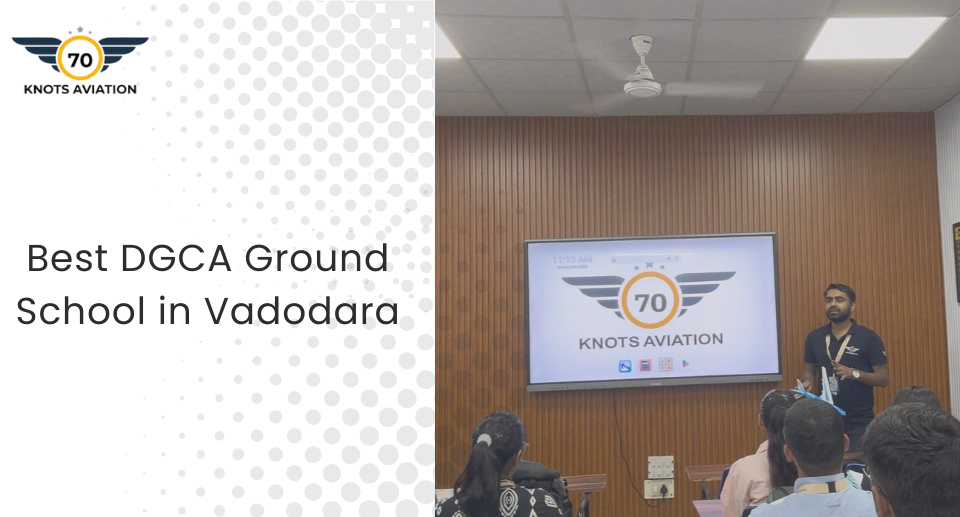
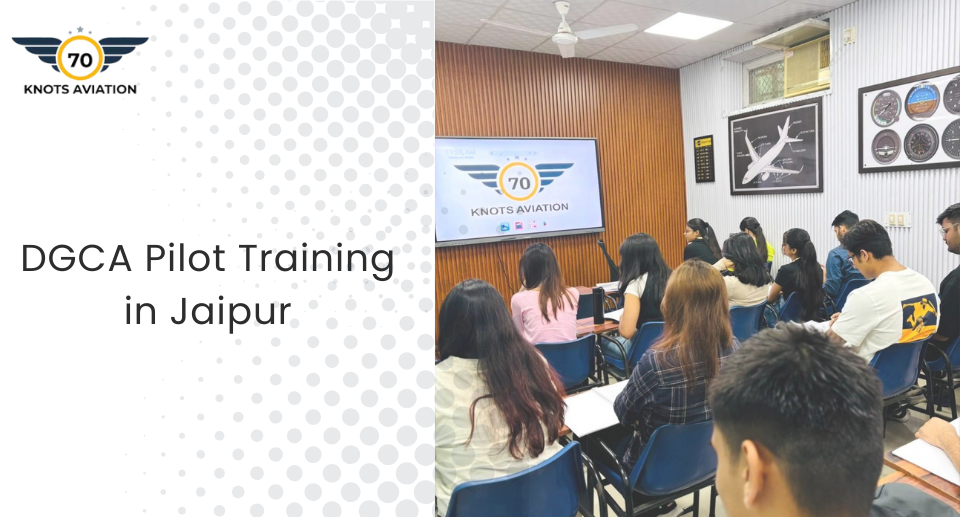
The best CPL ground classes in Jaipur offer comprehensive training designed to help aspiring pilots excel in the DGCA exams with expert faculty, structured curriculum, and interactive sessions tailored for quick learning.
Most institutes let you start ground school while you’re waiting to begin flying. Smart people do this.
The Second Phase: Flying Training (12-18 Months)
This is where the magic happens. You show up at the airfield, walk to your aircraft, and you’re actually piloting it.
First few flights, your instructor is basically flying and you’re just getting the feel. Then gradually—very gradually—you’re doing more and more. First time you actually take off and land without crashing? You’ll remember that forever. I’m not being dramatic.
The progression is careful:
- First 20-30 hours, you’re learning basic controls. How to turn. How to climb. How to descend. Everything else is your instructor helping.
- Next 30-40 hours, you’re refining those skills. Turns at specific angles. Climbs at specific rates. You’re developing muscle memory and precision.
- Then 50-70 hours of cross-country flying. This is where you leave the airport area and actually fly to other places. Real navigation. Real decision-making.
- Another 50-70 hours getting confident with advanced maneuvers, emergency procedures, bad-weather flying. What happens when your engine acts up? How do you handle it?
- 20-40 hours in a twin-engine aircraft. Airlines want pilots with multi-engine experience.
- 40-60 hours in a simulator. This is actually incredibly realistic. Modern simulators are so good that the experience transfers directly to actual flying.
Total: You need 200 hours of logged flying time before you’re ready for your license.
The Final Phase: Exams and Checkrides
You take written exams on those five ground subjects. Computer-based tests that DGCA conducts. They’re challenging but fair. Most people pass if they’ve actually studied.
Then comes the practical checkride with a DGCA examiner. This person watches you fly and evaluates everything—your skills, your decision-making, how you handle emergencies. It’s nerve-wracking, but if you’ve trained properly, you’ll be fine.
Pass everything, and you get your Commercial Pilot License. Congratulations. You’re officially a commercial pilot.
Who Can Actually Do This?
Not everyone can become a pilot, but the barriers are lower than you might think.
Education
You need to have finished Class 12 (10+2). Physics and Math should be your subjects, though DGCA is loosening this requirement. If you didn’t do science, some institutes offer bridge courses now.
Honestly? You don’t need to be a genius. You need to be willing to study and reasonably intelligent. That’s it.
Age
You need to be at least 17 to start. That’s it. No upper age limit. I’ve seen people in their 40s and 50s doing this for a second career.
Medical
This is the one barrier that’s real. You need to pass a Class 2 medical (to start training) and later a Class 1 medical (to fly commercially).
The Class 2 is basic: they check your eyesight, hearing, general health. Takes 2-3 hours. Costs about ₹10,000.
Class 1 is more thorough. They want to make sure you’re mentally and physically capable of handling emergencies. But here’s the thing: wearing glasses is completely fine. People with corrected vision of 6/6 are approved all the time. You’re not disqualified for stuff like mild asthma or past injuries unless they affect your ability to control an aircraft.
The medical exam is honestly the one thing that can be a deal-breaker, but for most reasonably healthy people, it’s not a problem.
Criminal Record
DGCA runs a background check. If you’ve got serious criminal history, that’s a problem. Otherwise, you’re okay.
English
You need to speak and understand English because that’s the language of international aviation. It’s non-negotiable. But you don’t need to be Shakespeare. You need to communicate clearly and understand radio procedures.
The Money Reality
This is the conversation everyone wants to have but feels awkward asking.
Pilot training costs serious money. Let’s break it down honestly:
Flying Time: ₹25-35 Lakhs
This is your biggest expense. You’re paying for aircraft, instructors, fuel, maintenance. Single-engine training is cheaper than multi-engine. Some institutes charge ₹1.20-1.50 lakhs per flying hour. Others charge ₹1-1.20 lakhs. Over 200 hours, it adds up fast.
Ground School: ₹2-4 Lakhs
This is what you pay for classroom instruction, study materials, online resources. Some institutes bundle this with flying. Some charge separately.
Simulator Training: ₹1-2 Lakhs
Modern flight simulators cost serious money to operate. You typically do 40-60 hours of simulator training, which costs ₹30,000-50,000 per hour at busy times, though some institutes give package discounts.
Medical Exams: ₹8,000-15,000
Class 2 and Class 1 medical certificates. The Class 1 is pricier because it’s more thorough.
DGCA Exams: ₹5,000-10,000
Your theory tests and practical exam fees.
Books, Study Material: ₹30,000-50,000
You need quality study guides. Don’t cheap out here.
Uniforms, Gear: ₹50,000-₹1,00,000
Professional pilot uniform, headset, kneeboard, all the stuff pilots need.
Real Total: ₹40-50 Lakhs
There’s no way around it. It’s a serious investment. It’s probably more than you’d spend on an engineering degree, and less than a medical degree. It’s real money.
How People Actually Afford This
Education Loans
Banks like HDFC, ICICI, Axis will loan you money for pilot training. They know pilots make decent money, so they’re willing to lend. Interest rates are reasonable. You typically start repaying 6-12 months after you get your first job.
Airline Cadet Programs
Air India, IndiGo, Go First, and SpiceJet run programs where they sponsor your training in exchange for a 5-year contract. You train with them, they pay for your CPL. In exchange, you commit to flying for them. This is honestly a smart move if you can get selected.
Family Investment
A lot of people get help from parents or family. It’s not shameful. Becoming a pilot requires investment, and families invest in their kids’ futures all the time.
Scholarships
Good institutes offer merit scholarships to toppers and need-based scholarships to deserving students. Not full scholarships typically, but 25-50% discounts happen.
Part-Time Work
Some people work part-time during ground school to offset costs. Flying training usually needs to be full-time, but ground school can accommodate some flexibility.
Pay-as-You-Go
A few institutes let you pay for flying hours as you go instead of upfront. It’s slower, but it spreads the cost.
Choosing an Institute: Don’t Rush This
This is the most important decision you’ll make. You’re spending ₹40-50 lakhs and 2 years of your life. Choose badly, and you’ll regret it.
Here’s what I’d actually check:
DGCA Approval
This is non-negotiable. No DGCA approval? Don’t even talk to them. Check the official DGCA website to verify approval status.
Fleet Size
Ask how many aircraft they have. If they have 3-4 planes and 50 trainees, you’re going to wait a lot. Good institutes have a 1:5 or 1:6 aircraft-to-student ratio.
Instructor Quality
These are the people teaching you to fly. Ask about their experience. How many flying hours? What airlines have they worked for? Have they trained other students who got hired? Meet some of them if you can.
Actually Talk to Current and Former Students
Go to the academy. Hang out. Talk to people who are training there right now. Ask them honestly: Are they happy? What’s hard? What’s good? What would they change? Current students will give you real feedback.
Placement Records
Ask for proof. How many students got hired by airlines in the last 2 years? Which airlines? If they can’t show you numbers, that’s suspicious.
See the Facilities
Visit the academy. Look at the aircraft. Are they well-maintained? Does the simulator work? Are the classrooms decent? You can tell a lot about an institute by its facilities.
Fee Structure
Get everything in writing. What’s included? What’s extra? Are there hidden charges? Compare 2-3 institutes side by side.
Financial Stability
Is the institute established? Are they expanding or shrinking? Will they be around in 2 years? You don’t want to train with a struggling academy that might collapse.
Jaipur’s Actual Pilot Training Scene
I’ve visited most of the serious institutes in Jaipur, and honestly, there are some really good ones here. What matters is that you find an institute that’s DGCA-approved, has a solid track record, and genuinely cares about producing competent pilots.
When you visit Jaipur institutes, you’ll see something interesting: Jaipur attracts serious students. Not kids who think flying is cool and want to try it. Actual people who’ve thought about this carefully. The student body is more focused, the environment is more professional.
The best institutes in Jaipur have solid reputations with airlines, a healthy aircraft-to-student ratio, experienced instructors, and transparent fee structures. They’re not necessarily household names, but that’s kind of the point—they focus on quality over marketing and actually produce competent pilots that airlines recognize and respect.
What Happens After You Get Your License?
Here’s where it gets real.
You’re now a Commercial Pilot Licencee with 200 flying hours. You’re legally allowed to work as a pilot. But airlines have their own additional requirements.
Most airlines want you to do a “Type Rating”—essentially airline-specific training on their aircraft. An Airbus A320 is different from a Boeing 737, and you need training on whichever plane the airline operates. This takes 3-6 months and the airline usually pays for it.
Then comes the actual hiring: interviews, simulators, final checks. If you’re hired, you start as a First Officer (co-pilot) on their junior rosters. Your salary starting out? ₹3.5-5 lakhs a month depending on the airline and your experience.
The Career Trajectory
First Officer years: ₹4-6 lakhs a month. You’re building hours, getting experienced, learning the airline’s culture.
Senior First Officer: ₹6-10 lakhs a month. You’ve got experience. Pilots trust you.
Captain: ₹15-30 lakhs+ a month. You’re running the show. International routes pay more.
The progression typically takes 10-12 years to become a Captain, though some fast-trackers do it in 8-9 years.
Real Talk: Is This Right for You?
Pilot training isn’t for everyone. Here’s what it actually demands:
Discipline
Flying has zero tolerance for sloppiness. You need to follow procedures exactly, every single time. Some people rebel against this. If you’re that type, reconsider.
Stress Tolerance
Your instructor will challenge you. You’ll make mistakes. You’ll have bad days. You need to handle criticism and keep improving without falling apart.
Time Commitment
18-24 months of intense focus. You’re not having a relaxed college experience. You’re grinding.
Risk Comfort
You’re learning to fly. There’s actual risk. Most of it is managed brilliantly by training programs, but it’s not zero risk. You need to be comfortable with that.
Patience
Everything takes longer than you think. Weather delays. Aircraft maintenance. Waiting for slots. You need patience.
Decision-Making
Flying requires constant decision-making. Not just big decisions, but small ones that compound. You need decent judgment.
If you’re someone who wants to be a pilot because you love flying, because you love the responsibility, because you love being in control of something complex and important? Go for it. You’ll thrive.
If you’re doing it because you think it’s cool or prestigious or pays well? That might not carry you through the tough months.
The Ground School Subjects: What You’re Actually Learning
Air Navigation
This sounds boring, but it’s kind of fascinating once you start. You learn dead reckoning—calculating where you are based on time and distance and direction. You learn about radio navigation—how beacons on the ground help you navigate. You learn GPS and modern navigation systems.
The practical part? You actually navigate the plane using a map and compass and coordinates. It’s old-school in a digital age, but it’s important. What happens if your GPS fails? You need the old skills.
Meteorology
Weather kills pilots. Understanding weather is literally about survival. You learn weather patterns, cloud types, wind shear, microbursts, thunderstorms, icing conditions. You learn how to read weather reports and forecasts and understand what they mean for your flight.
The fascinating part is that weather affects flying way more than most people realize. A headwind vs. a tailwind changes your fuel consumption. Icing can happen suddenly and is extremely dangerous. Knowing weather is knowing your enemy and your environment.
Air Regulations
The rulebook. But it’s not as boring as it sounds because the rules exist for reasons. You learn how Indian airspace is organized. You learn about VFR (Visual Flight Rules) and IFR (Instrument Flight Rules) and which you can use when. You learn about crew responsibilities, licensing requirements, and your legal obligations.
It’s the part that makes you an actual professional, not just someone who can fly.
Radio Telephony
This is communication. Pilots use standardized language on the radio so everyone understands everyone else. “Ready to taxi” doesn’t mean “I’m ready,” it means a specific set of actions. “We have a go-around” means a specific situation that everyone trained to handle the same way.
You’ll practice this endlessly until it becomes second nature. It’s incredibly important.
Technical General
How does an aircraft work? Engine mechanics, aerodynamics, flight controls, navigation systems, electrical systems. You don’t need to be an engineer, but you need to understand your machine.
Why does the plane stall? (Not what you think—it’s about airflow, not speed.) How does the landing gear work? What happens if a hydraulic system fails? What indicators tell you something’s wrong?
This knowledge is your safety net. It’s what lets you identify problems and handle them.
The Actual Day-to-Day: What Training Looks Like
Flying Days
You show up at 5:30 AM (weather briefing and preflight checks). By 6:30 AM, you’re wheels-up. The flight lasts 1-2 hours depending on the lesson. You land, debrief with your instructor for 20-30 minutes. You’re done by 9 AM. Then you go back to your accommodation and study.
Some days you’ll be on the ground studying for exams instead of flying because weather is bad. Some days you’ll fly multiple sorties (flights). Some days you’ll do simulator training instead.
Grinding
Between flying, ground school, and exam preparation, you’re busy. Like, really busy. Your calendar fills up months in advance. Bad weather? You’ll try to catch up on studying or simulator training.
Progress
You see clear progress. After 10 hours, you’ve flown alone for the first time. After 50 hours, you’re comfortable in the air. After 150 hours, you’re starting to feel like a real pilot. At 200 hours, you’re ready for your checkride.
This progression keeps you motivated. You’re not just grinding; you’re actually getting better at something real and important.
Questions People Actually Ask
Can I really wear glasses while flying?
Completely. Tons of pilots wear glasses. As long as your corrected vision is 6/6 and you pass the medical, you’re fine. I’ve flown with captains who wear thick glasses.
How long does this really take?
18-24 months is realistic for most people. Some people finish in 16 months. Some take 26-28 months. Weather, aircraft availability, and your own pace make a difference.
What if I fail an exam or checkride?
You get retakes. Most people don’t fail outright; maybe they get asked to re-attempt a ride or restudy a subject. It happens. It’s not the end of the world.
Is Jaipur safe for training?
Completely. The airspace is manageable, the weather is predictable, and the institutes are professional. Safety is taken seriously.
What’s the job market like?
Right now? Decent. Indian aviation is growing. Airlines are hiring. You won’t struggle to find a job if you have your CPL and decent interview skills. After COVID, things bounced back well.
Can I change airlines after I start flying?
Yes. You’re not locked in unless you signed a contract with airline sponsorship. Most First Officers move around a bit before settling with an airline they like.
What’s the hardest part of training?
Honestly? Staying motivated when progress slows. Your first 50 hours are incredibly exciting. Hours 100-150 can feel repetitive. You need mental toughness to push through.
What Makes Training in Jaipur Actually Different
If you’re considering different cities, here’s the real difference:
Delhi or Bangalore: Busier airspace, more competitive atmosphere, more expensive, faster pacing, more urban distractions.
Hyderabad or Indore: Newer institutes, sometimes less established, smaller student communities.
Jaipur: Sweet spot. Good institutes, manageable airspace, clear weather, reasonable costs, focused student community, good flying pace.
Plus, Jaipur’s got charm. You’re training in a beautiful city with decent food, culture, and a relaxed vibe. You’re not burning out in a megacity.
The Real Takeaway
Becoming a DGCA-licensed pilot is absolutely doable if you’re serious about it. It requires money, dedication, and 2 years of your life. But the payoff is substantial—you get a career flying aircraft, earning good money, with status and responsibility.
Jaipur is a genuinely good place to do this. Better weather than most places, reasonable costs, solid institutes, and a less-chaotic learning environment.
If this is something you actually want to do—not just fantasize about, but genuinely commit to—then take the next step. Visit an institute. Talk to current trainees. Understand what you’re signing up for. Make an informed decision.
The cockpit is waiting. But only if you’re actually ready for it.
The 70Knots Aviation team shares informative and practical insights on pilot training, aviation careers, DGCA requirements, CPL training, flight training, and the Indian aviation industry. Through well-researched articles, the team aims to help aspiring pilots, aviation students, and aviation enthusiasts understand training pathways, eligibility, courses, and career opportunities in aviation. As one of the best pilot training institutes in India, 70Knots Aviation provides clear and useful information to support readers at every stage of their journey toward a career in the skies. With a focus on practical aviation knowledge, the team brings together valuable insights to help readers make informed decisions about their aviation education and career.